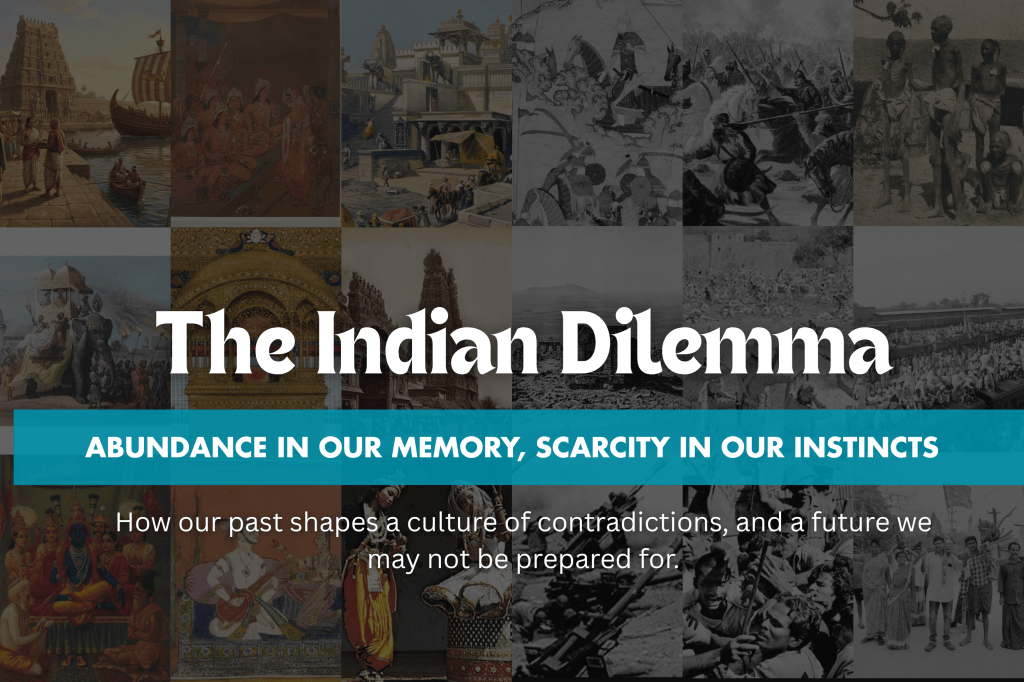
When I think about our history as the people of this geography, of this civilization, one distinction that comes to mind is our past divided into pre-colonial and post-colonial India. Our history goes much further back than this, of course, but for the scope of this blog, and for my understanding of how our culture was built, I want to use this distinction for now.
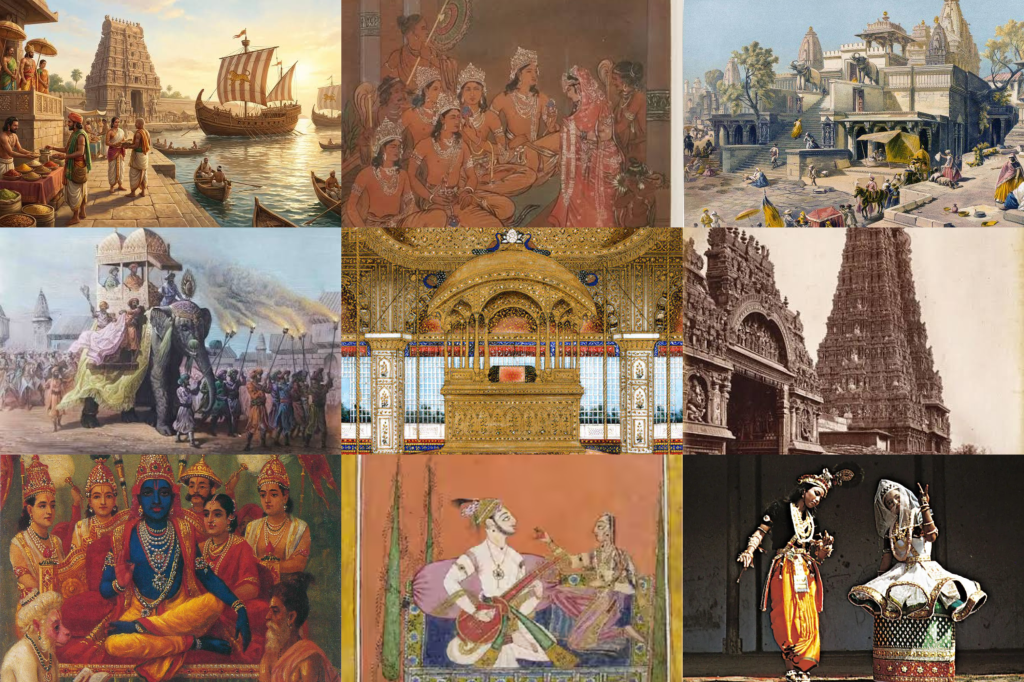
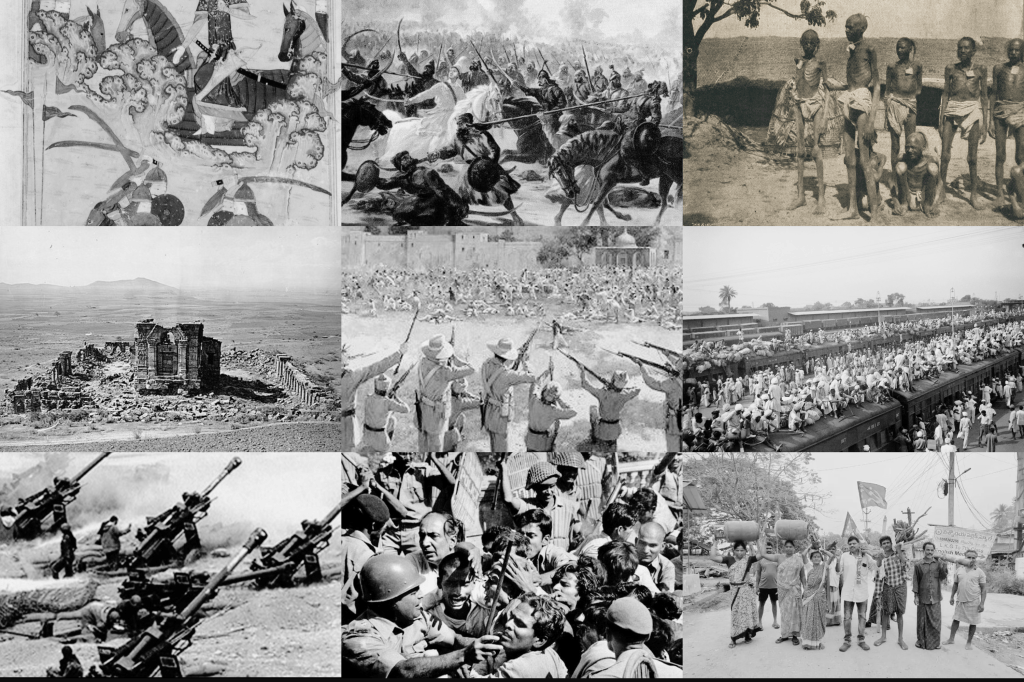
Why does this distinction matter? Because the India we imagine before colonial rule and the India we imagine after it are widely different, especially in the stories we hear from our elders and the narratives we consume through popular culture. The India before colonial rule is often remembered through abundance: art, architecture, culinary history, textiles, trade and prosperity. The India after colonial rule is remembered through poverty, malnutrition, scarcity, famines and economic instability, at least until the last few decades.
What we remember about these periods matters to this argument, not necessarily because it helps us arrive at a historically accurate picture of every era, but because our collective understanding of the past has played a significant role in shaping our culture. I am choosing two broad and almost extreme periods for the sake of this argument. The actual history of how prosperous or deprived people were varied across regions, communities and time.
But this collective memory of abundance and scarcity gives us a rather extraordinary contradiction. We imagine ourselves as people who came from abundance, while many of our families have lived through the experience of scarcity. And I believe this contradiction is important to understanding Indian culture: what it is that we are proud of, what we need to preserve, and what we may need to let go of.
The Abundance We Remember
India’s abundance in the past did not come only from how we looked at art. It also came from the environment we lived in and the resources we were able to produce.
Our geography, varied climates, agricultural lands, rivers, forests and natural resources supported a wide range of livelihoods and industries. We grew food, worked with metals, wove textiles, produced crafts and built networks of trade that connected different parts of the subcontinent with the world. Our abundance was not simply a matter of luxury. It was also the ability to produce, to create surplus, and to turn the resources around us into something of value.
This is one of the reasons India became an important centre of trade and, at different points in history, a target of invasions and colonial extraction. The resources and wealth of this geography were valuable to those who wanted to control them.
Our maximalist approach to life was visible in the way resources were invested in art and architecture. We built temples, palaces, forts and monuments that still stand today. We created art that preserved histories and ideas across centuries. We developed literary traditions, music and dance forms that changed across regions, sometimes over distances of only a few hundred kilometres. We poured wealth into textiles, jewellery, crowns, thrones and the many objects through which power and beauty were expressed.
There is good reason to take pride in this inheritance. But there is also a contradiction within it.
The abundance we remember was not equally available to everyone. Much of the grandeur we celebrate was made possible by royalty, wealthy patrons and powerful institutions. The caste system and other forms of social hierarchy determined who had access to resources, opportunities and recognition. The people who built the monuments, wove the textiles, made the jewellery and created the art were not necessarily the people who enjoyed the wealth represented by those things.
The maximalist history we are so keen to show off is often the history of those who had the power to commission it. And yet, we remember it as a collective inheritance. We want to believe that all of us were part of that abundance, even when the lived experiences of people across the subcontinent were vastly different.
Perhaps this is a beautiful story to inherit. But it is not the whole story.
The Scarcity We Carry
The other past, the more recent one, is that of scarcity.
The British colonial economy caused immense damage to Indian livelihoods and productive systems. The country that became independent inherited deep economic challenges, and generations of Indians lived through poverty, food insecurity and limited opportunities. This past, unlike the one we remember through the grandeur of monuments and royal courts, was often felt directly by families around us.
The stories our parents and grandparents tell us about their struggles to go to school, to find work, to make ends meet, are not only stories of resilience. They are also stories of the difficult circumstances in which people had to live. For many families, the priority was simple: to secure a decent life for themselves and their children in an independent India.
But the trauma of scarcity is as real as scarcity itself.
The trauma of colonialism, partition, religious violence, the Emergency, riots and other moments of collective suffering does not disappear simply because the people who experienced them directly are no longer around. Even those of us who did not live through these events can inherit their memory through stories, institutions, public life and the way we understand our country.
A millennial or a Gen Z may never have met a freedom fighter, but the first time we read about what happened at Jallianwala Bagh, we encounter a pain that becomes part of our understanding of India. The memory of partition, of families being displaced and communities being torn apart, continues to shape how we think about identity and belonging.
The trauma of scarcity may also have shaped some of our instincts.
The idea that Indians are frugal does not come from nowhere. Many of our parents learned to save, reuse, adapt and prioritise because they had to. They knew how to manage money and make the most of what they had. These are valuable instincts, and there is much we can learn from them.
But I wonder if the trauma of scarcity has also made us more competitive with our own people. When a life of security feels difficult to achieve, we begin to prioritise our own family, our own progress and our own social position. We see another person’s success as something we need to catch up with. We compete for education, jobs, resources and status, sometimes without asking whether the systems we are competing within are fair.
This may be one of the reasons we struggle to respect public spaces, why corruption can become normalised, or why our idea of success can sometimes leave little room for the well-being of others. Scarcity is not the only explanation for these behaviours. Inequality, institutions, social hierarchies and the way we are educated also play a role. But the memory of having too little can make it difficult to imagine a world where we do not have to compete for everything.
And this is where our two memories begin to meet.
The Culture We Have Created
Our collective memory of an abundant past makes us maximalist. Our experience and trauma of scarcity make us resourceful, but can also make us anxious about our own position and the need to secure it.
Together, these instincts can create a culture that is difficult to sustain.
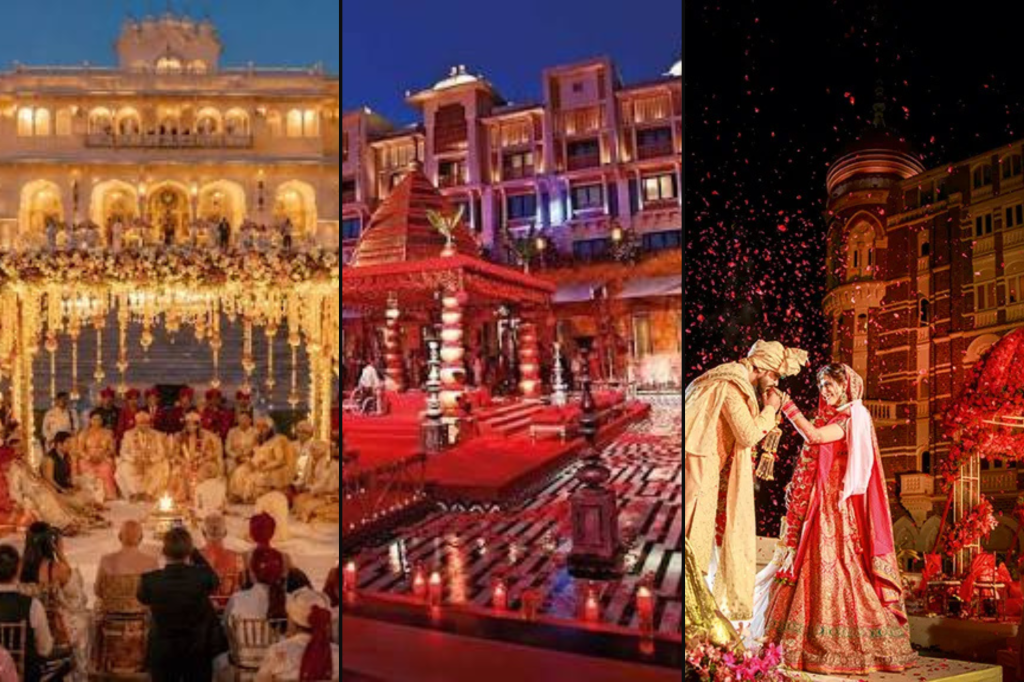
Consider Indian weddings. The idea that weddings have to be grand and magnanimous is partly shaped by our imagination of how royalty celebrated. Through popular culture, we have come to associate weddings with the grandeur of princes and princesses. The venue, the clothes, the food, the decorations and the number of people invited become ways of demonstrating that a family has arrived at a certain social position.
But the trauma of scarcity adds another layer. Even when a family’s budget is limited, there can be immense pressure to make a wedding happen at a scale that will preserve its social standing. Families may spend beyond their means, take on debt, or make compromises because the cost of doing less feels too high.
And then we add capitalism to this mix. A world that knows how to market our traditions and culture for profit gives us more things to buy, more ways to display our success, and more reasons to believe that a celebration must be bigger to be meaningful.
The contradiction is not in wanting to celebrate. It is in how quickly the scale of the celebration becomes a measure of our worth.
Imagine what we do to our festivals.
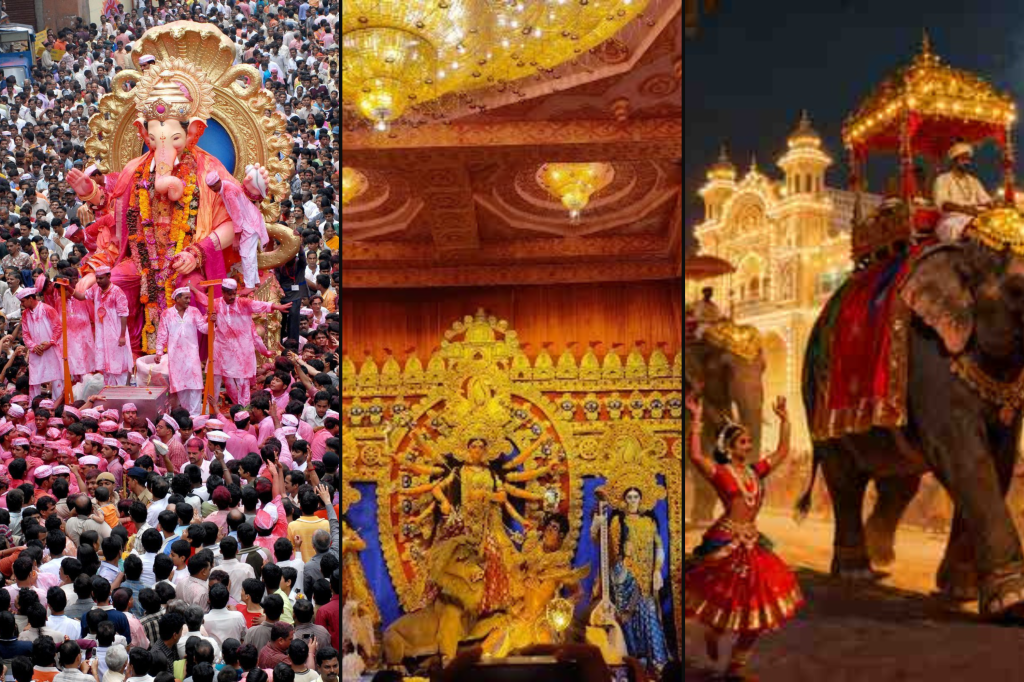
Every year, the budgets of our Ganesh pandals and Durga Puja pandals can grow. We want to be more maximalist in our approach, to showcase that our traditions are intact, that our community can do better than last year, that our celebration is bigger and more spectacular than the one before it.
We want to do this for our community, our neighbourhood and our families. But not everyone can afford the materials and resources that such grandeur demands. So we often turn to cheaper alternatives, without always thinking about their long-term consequences.
Plastic decorations, disposable materials, Plaster of Paris idols, and the flowers and puja samagri that find their way into our rivers are all part of this contradiction. We want our celebrations to be grand, but we do not always think about the resources being used or the waste being created. We want to be maximalist, while also trying to manage costs, and the environment ends up bearing part of the burden.
In all of this, two questions need our attention.
The first is about the environment. Who bears the responsibility for our maximalist approach? The river that receives the waste? The people who live beside it? The communities that depend on these resources? The future generations who will have to live with the consequences?
The second is about our culture itself. Are we protecting our traditions through these celebrations, or are we slowly turning them into performances of social standing? What does it mean to preserve a culture if the way we practise it damages the resources and communities that allow it to continue?
The problem is not that our festivals are colourful, elaborate or joyful. Nor is sustainability simply about making every celebration smaller. It is about asking whether our imagination and resourcefulness can come together to make our celebrations meaningful, without making their costs invisible.
What We Are Losing, and What We Are Not Supporting
The abundance of resources that once supported our economy no longer exists in the same way. Our resources are under pressure, and the ability to make a livelihood from them has changed. This is one of the reasons many people look elsewhere, including to the West, for better economic opportunities.
But if we think about what makes our culture distinct, the other part of our inheritance is art.
Our architecture, textiles, cuisine, literature, music, dance, crafts and countless other practices are not just remnants of the past. They are living expressions of people, communities and skills. And yet, our conversations about protecting culture rarely focus enough on how we support the people who create it.
We take pride in the architecture that survived, but do we invest enough in preserving the knowledge and skills needed to maintain it? We admire our textiles, but do we value the weavers? We celebrate our cuisine, but do we think about the people and systems that sustain its ingredients and traditions? We speak of our music, literature and art as our cultural inheritance, but how often do we create the conditions for artists to make a living?
We want the grandeur, but we do not always value the labour behind it.
Today, artists are also being replaced or sidelined by technologies that make art more readily available. AI can now be used to design posters, generate images and produce creative work at scale. These tools can be useful, but they also raise questions about the agency, livelihood and recognition of artists. When we value only the finished product, and not the person or process behind it, we risk stripping art of some of what makes it meaningful.
This is another consequence of our relationship with abundance and scarcity. We want to consume more, but we are anxious about what it costs us. We want culture to remain grand, but we may not want to pay for the people who make it. We want to preserve our inheritance, but we do not always support the living practices that could carry it into the future.
The culture we inherit is not only what has survived. It is also what we choose to sustain.
What If We Used These Instincts Differently?
While the future may look bleak at this point, I feel the key to sustaining our culture lies in understanding these two identities that we carry as Indians.
Our maximalist attitude gives us an ability to create, imagine, celebrate and bring people together. Our experience of scarcity has made us resourceful, taught us to value what we have, and shown us how to make things work even when resources are limited.
What if we brought these two instincts together, not only to make our celebrations grand, but to make our country and its citizens thrive?
I think about bhandaras in Jabalpur. At their heart, they are a beautiful idea: people come together to distribute food and make sure that others are fed. There is generosity in the act, and a recognition that a celebration can be shared with people beyond our immediate circle.
But sometimes, the focus shifts. The menu becomes more elaborate, the scale grows, and the question becomes who organised the bigger or better bhandara. The act of feeding people can turn into a competition over the celebration itself.
There is nothing inherently wrong with a grand bhandara. The question is whether its scale serves its purpose. Could the same generosity be directed towards reaching more people, reducing food waste, or supporting those who need food beyond the day of the festival?
And what if this idea extended beyond food?
We know how to mobilise people and resources for a festival. We know how to organise, raise money, build, create and bring communities together. What if we used that same energy to volunteer with non-profits, support community-led organisations, fundraise for causes, help distribute food, or contribute our skills to social work?
These acts do not always have to be grand or visible. They do not need to become another competition over who gave more, who helped more, or whose contribution was recognised. They can be consistent, thoughtful and directed towards the needs of people.
Our maximalist instinct can help us mobilise resources. Our resourcefulness can help us use them wisely. And our cultural instinct to come together can help us build a society where generosity is not limited to festivals, where helping others is not only a public performance, and where the well-being of our citizens becomes a shared responsibility.
Perhaps this is what we need to preserve from our past: not the expectation of grandeur, but the ability to create abundance together.
The best way to honour the abundance of our past may be to make its beauty more accessible, and to support the people who continue to create it. The best way to honour the trauma of scarcity may be to build a society where fewer people have to live with it.
We have inherited a culture that knows how to make things extraordinary. The question is whether we can also learn to make them thoughtful, accessible and sustainable.
Because culture is not only what we remember. It is what we choose to keep creating, and the people and places we choose to care for along the way.




Leave a Reply