Note: I’ve added hyperlinks to certain terms or discussions that come up throughout the blog. If something feels unfamiliar, feel free to click and explore further context along the way.
The Trickle-Down Discourse Crisis
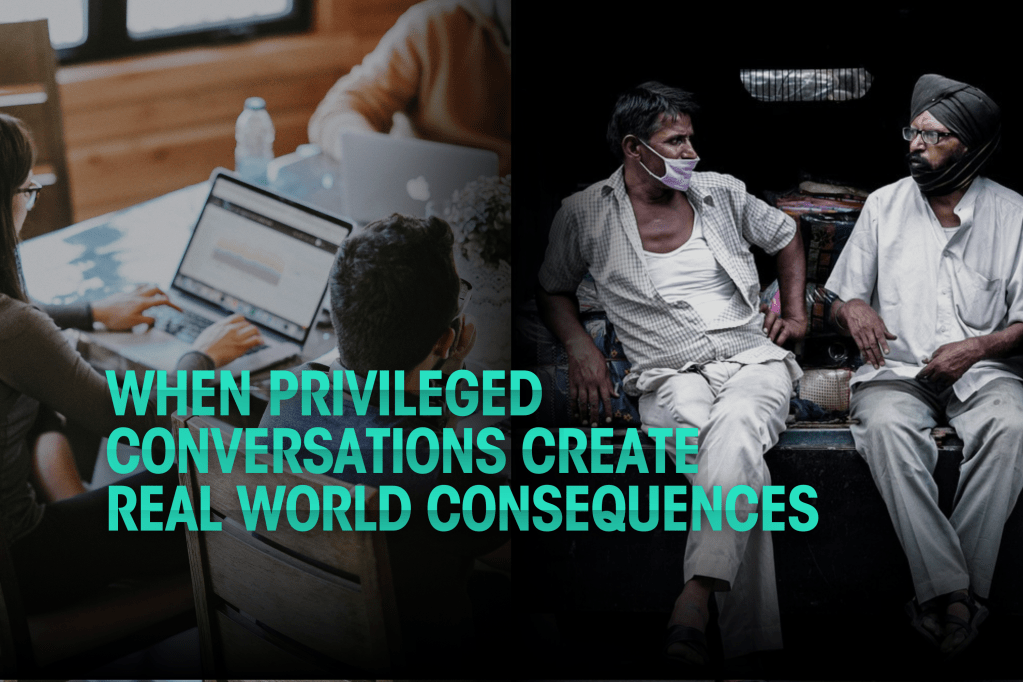
There’s a new kind of inequality shaping our world—not just in income or access, but in the stories we tell, the language we use, and the conversations we choose to have. A gap that’s not only created by economic privilege, but by who has the power to define what is “just,” what is “problematic,” and what’s worth trending.
We’re living in what I call the trickle-down discourse crisis—where narratives shaped by people in positions of privilege reach those with far less, without the tools or context to make sense of them. It’s like how governments once declared war without acknowledging that the poor were the ones who would pick up the guns, march to the borders, and die first. Today, these “wars” happen through reels, podcasts, and Twitter threads—but the fallout still lands at the bottom.
Let’s start from the top.
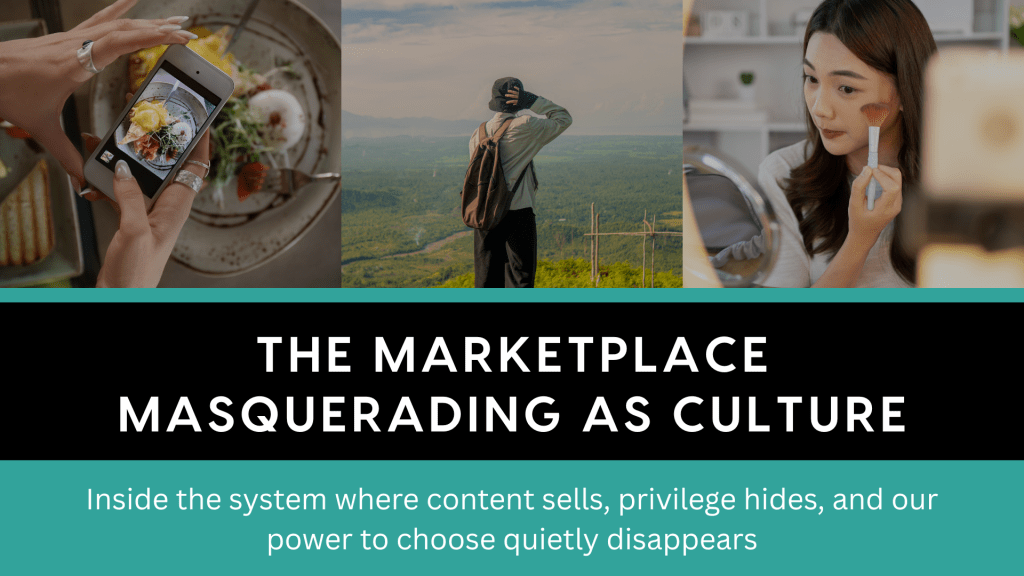
Every day we scroll through endless content—people showing off their luxury vacations, aesthetic cafés, skincare routines, clothing hauls, soft life affirmations. This lifestyle—clean, curated, and calm—isn’t just being consumed in Bandra or Brooklyn. It’s reaching boys and girls in small towns who still live with inconsistent electricity, poor roads, and limited financial independence.
They’re watching influencers tell them to “romanticize their life” while they don’t have the space or the silence to breathe freely. That constant pressure to “look successful,” to live a certain life without the basic support systems, is quietly eating away at self-worth. No one tells them how to get there—they’re just told they’re behind.
Then there’s what the internet serves next: ideology, disguised as advice.
Look at the manosphere—where every second reel is about “alpha males,” “high value men,” “how to keep women in line,” and “why feminism is ruining men.” This content isn’t just living in some dark corner of Reddit anymore. It’s on Instagram, YouTube, WhatsApp. It’s reaching boys in towns and villages who grew up watching their mothers ask permission to leave the house. Now they’re hearing that women are manipulative, modern girls are dangerous, and being emotionally open is weak. What begins as commentary about alimony or job disparity in a metro city, lands in a home in a tier 2 city as permission to control or silence women. Patriarchy gets a digital upgrade.
And then we come to caste and religion, where the gap between discourse and reality becomes even more dangerous.
You’ll hear people in cities debate caste-based reservations, talk about “merit,” or say “we’re beyond caste now.” But in many parts of the country, caste discrimination is still very real—whether it’s about temple entry, water access, or who sits where at school. Yet these digital narratives are not about that lived oppression—they’re about how unfair reservation is. That narrative, packaged as victimhood, makes its way back to villages via reels and YouTube explainers.
Same with religion. Take the recent outrage around the Waqf Board. A policy-level issue, discussed and dissected by elites, turned into WhatsApp forwards and social media bait that sparked real-world tension. Or take the National Educational Policy—an educational reform that, stripped of clarity and filled with fear, led to people venting their anger on their own city residents in Maharashtra. That’s how it happens. The debate starts somewhere else, but the fire spreads everywhere.
We feel like we’re “raising awareness,” but we’re outsourcing chaos. We’re sharing half-baked information, complex issues with no history, and it all ends up trickling down to people and places that were never even part of the original conversation.
This is where class becomes the real divide.
People with access and influence can talk. They can question, retreat, nuance, and intellectualise. But those without access? They’re just expected to keep quiet or play along. This isn’t a story of “us and them”—this is about how some elite circles shape narratives that impact people on the ground who were never part of the framing. Often, it’s not even that people can’t or shouldn’t be part of these conversations—it’s that the issues discussed don’t emerge from their context, and when they arrive, they sometimes create more confusion than clarity.
And the most dangerous part? Social media makes it look like we’re all in the same room. We’re not.
In some parts of the world, the conversation is about identity politics, soft power, and algorithm tweaks. In other parts, people are still figuring out how to pay school fees, access clean water, or secure basic healthcare. But that difference doesn’t show up in a 15-second video.
So what do we do?
We pause. And ask:
- Why is this being said now?
- Who is benefiting from this version of the truth?
- Am I sharing this because it’s true—or just because it got my attention?
- Am I creating clarity—or adding to the chaos?
As I wrote earlier in Awareness Without Action:
If you’re not helping, you might be hurting.
We don’t need more conversations. We need more careful ones.
We don’t need to share faster. We need to understand better.
Because facts without history are dangerous.
And silence isn’t always neutral.
In this silent war of narratives, ask yourself:
Are you amplifying justice—or just echoing privilege?
Because if your version of progress doesn’t include those still waiting for access—
It’s not progress.
It’s just privilege, disguised as awareness.


 Rahagir
Leave a comment