In 2018, when I took my first-ever trip to Jaipur, I was captivated by the city’s rich history and eager to experience it firsthand. For the three days I spent there, I relished exploring the streets, immersing myself in the local culture and traditions. I didn’t know about the trending cafes or Instagram-worthy hotspots at the time – my focus was on discovering the places I had read about in history books or learned about from others. That trip to Jaipur was truly memorable, and when people ask me for recommendations, I always encourage them to venture into the old city and uncover its hidden gems for themselves.
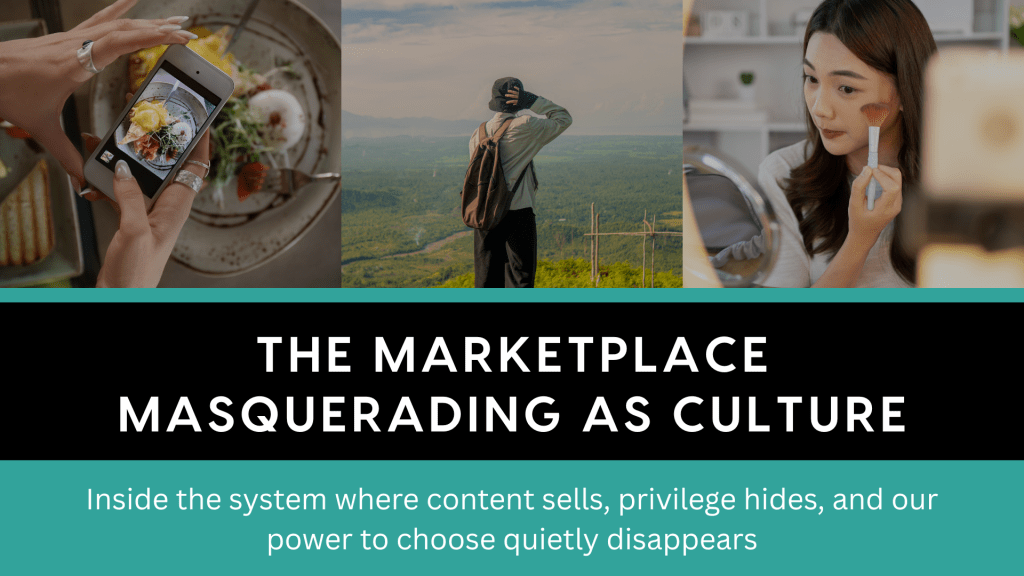
Fast forward to 2024, almost six years later, when I visited Mcleodganj. This time, our primary objective was to seek out the best cafes across town – the ones that had gained popularity on social media, featured in reels, or been recommended by travel bloggers on Instagram. It struck me how the landscape had shifted so dramatically. The internet now feels like a vast marketplace, with celebrities and influencers constantly selling us everything imaginable. Even the simple act of walking through a supermarket aisle has been transformed, as organic brands pop up on our Instagram feeds, complete with convenient payment options.
I’ve become a product of this convenience myself, and it’s concerning to see how we’re seemingly headed towards a Wall-E-esque dystopian future, where we’re nothing more than perpetual consumers, indulging in entertainment while AI takes control. But beyond the allure of ease and accessibility, there’s a deeper, more insidious threat that we’re all underestimating.Consumerism is not just about making things more convenient and accessible; it’s also manipulating our minds. We now find ourselves desiring things we don’t truly need. I’m not talking about the occasional thoughtful gift for a loved one, but the constant pressure we put on ourselves to book that international trip or acquire the latest must-have item. The elitism and privilege on social media know no bounds, as we’re constantly inspired by the lifestyles and experiences shared by influencers – lifestyles that are often unattainable or unsuitable for the majority of us.
The “should have” mentality is more prevalent than ever. The trendy cafes in Dehradun and Manali may have looked enticing on social media, but the reality of overcrowding and disappointment set in once we all flocked there. And let’s not even get started on the fitness industry, which has successfully made us all feel guilty about not doing enough in our lives. The problem lies in the lack of context and relatability. How do we provide the right context when recommending something to others? Do we base our recommendations solely on the popularity of a show, or do we consider whether the person we’re suggesting it to even enjoys that genre? Consumerism forces us to feel like a herd, all needing the same things in life, and the real issue is that we’ve become far too invested in this mindset.
It’s just about accessibility versus interest. People with the means to access resources want to do everything and anything, regardless of their actual interests. Treks and travel have become everyone’s business, without a true understanding of how integral cultural immersion and appreciation are to the travel experience. I’m baffled by the sight of Maggi and other lowland foods being consumed in the mountains – why would you need your comfort food when you’re out of your comfort zone? I’m reminded of Rahul Sankrityayan’s accounts of his travels to Tibet, where he would willingly forgo his own comforts to live like the local people, immersing himself in their culture and traditions. Hobbies and interests have become more about accessibility than genuine passion.
If you feel trapped in this web of consumerism and social media, then welcome to the other side of the Matrix, my friend. You can clearly see how consumerism has become a tangled web, ensnaring us all in a cycle of doing things we don’t truly enjoy and buying things we don’t really need. The solution is not to give up everything, but to reconnect with the things you’ve always loved to do. That’s how you break free from the matrix. When I started podcasting, I didn’t want to sell a lifestyle, a product, or even myself – I simply wanted to share. That’s always been my approach to social media: share what you love, and let people decide whether they want to engage with it or not.
 Rahagir
Leave a comment