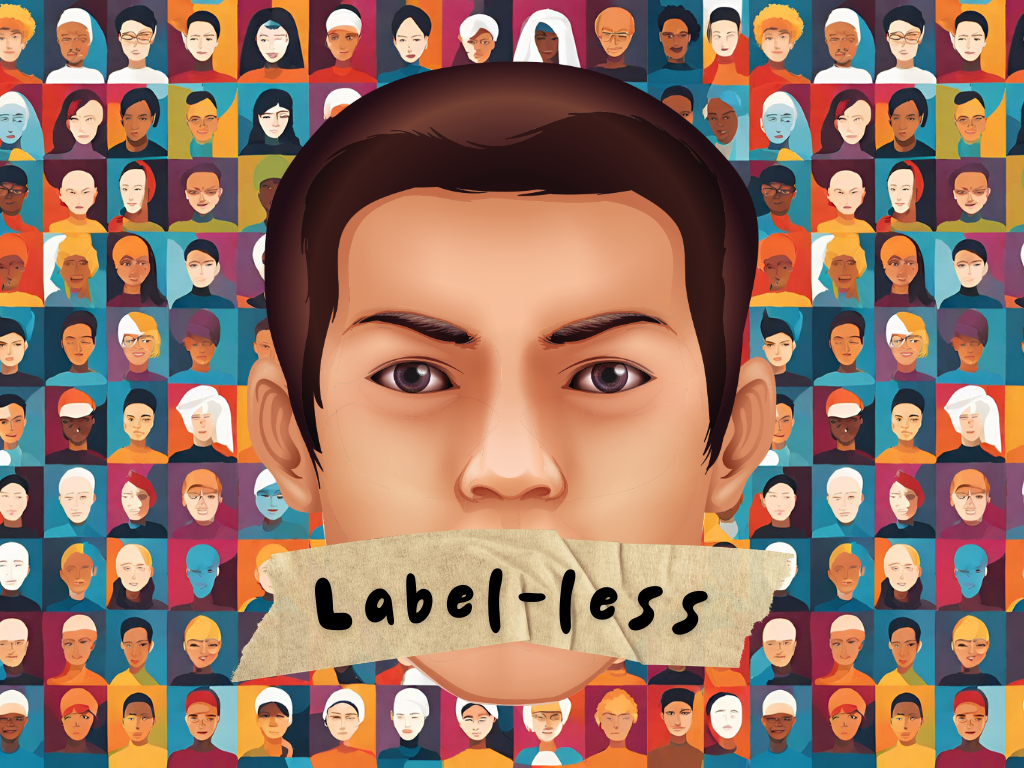
Why do we label?
People like to simplify things by giving them names, which comes from our need to understand the world. Whether it’s plants, animals, or food, naming things helps us make sense of what’s around us. Grouping and labeling became a way for us to survive by understanding, telling things apart, and taking action. As time passed, the habit of giving names to groups became a part of how we think, forming the basis for the labels we use today.
Labels are like quick summaries that help us understand situations and behaviors. They might sometimes be wrong, but they give us a general idea. We use labels because it’s a practical way to navigate and make sense of the world. Sometimes, people label others to categorize and judge them, feeling secure even though it can create divisions. But labels can also be empowering for groups trying to redefine negative ones.
Labels and the Modern World
When discussing labels in the modern world, it’s crucial to remember their original purpose – to understand and appreciate diversity.
A modern issue at the crossroads of labels is gender and sexuality. Many people who want to stick to traditional values, resist broadening the idea of labels to include different perspectives of people on gender and sexualities. This resistance often leads to a lack of consideration for others’ experiences and identities.
In the last few years, a lot of issues have been raised, the existence of feminism has been questioned while the LGBTQIA+ community has always faced the brunt of people either labeling them as something they are not or refusing to accept their labels. A section of people feel uncomfortable even talking with someone outside their traditional labels. A very recent issue is how people feel uncomfortable with the increased representation of women or the LGBTQIA+ community in the mainstream media.
From labeling individuals wrongly and then not accepting new labels when people come up with labels for themselves, the issue is just hypocritical now. To the point that it results in disrespect, violence, and a lot of passive aggression toward the community.
While labels were first made to understand the differences between genders, using them to shape or isolate individuals raises a big question. Imagine being pushed into a group that doesn’t match who you are – it’s not fun and can seriously affect how you feel about yourself.
What can be done is to respect people who don’t fall into your idea of labels – it’s pretty simple. If you can’t understand new things, just ask. And if talking to people you don’t understand feels like too much effort, it’s okay, just avoid it. Stick with folks who think like you. But then, don’t complain if the world moves forward and starts giving them the respect they deserve.
For example, if someone uses ‘they/them’ pronouns that you’re not familiar with, take the time to look it up or ask them questions for a better understanding. If you’re not interested, that’s fine – just don’t bother them. But if you are bothered that other people give them the respect they deserve, then you should reflect on where you might be going wrong.
We’ll talk about one more crossroads – culture and behavior. Labels can help initiate conversations, but finding common ground doesn’t always require delving into cultural details. It’s ok to keep conversations simple without bringing labels into every discussion. This goes beyond cultural differences, it’s not necessary to bring labels into a conversation just for the sake of it. The key is – Yes labels do pop up in your head, sometimes it is involuntary and you may be powerless about it but have control over your mouth and actions – that power remains with you.
Labeling is convenient for remembering information, but in subjects like sociology and anthropology, dealing with people is complex. Using labels solely for convenience or a false sense of security is not advisable. Labels may establish safety boundaries in thoughts but should not dictate actions.
Instead of limiting understanding to surface-level labels, use intelligence to explore deeper. IQ should be a tool for understanding and broadening perspectives, not for pettiness.
So what can be done instead?
Labels are like markers, offering insights into someone’s background, language, or religion. However, these labels should not be rigid rules; they are starting points, not the finish line. A line exists between genuine understanding and misusing labels by thoughtlessly applying them to people.
Education is a big deal here. We don’t know everything, so learning more helps us avoid being ignorant. Education isn’t just about knowing facts; it’s a tool to understand, ask questions, and, most importantly, not shut down other people’s ideas. Ignoring different views stops us from learning cool stuff from different perspectives.
The idea of ‘unlabeling’ oneself encourages introspection to determine whether the labels used genuinely reflect personal identity or merely meet others’ expectations. It’s an opportunity to break free from labels and discover unknown aspects of oneself.
Embracing diversity is crucial. The world is vast, and each person brings something new – diverse ideas and values. Welcoming this diversity makes conversations more engaging and helps appreciate the uniqueness of each individual.
In short, watching our language is more than just words; it’s how we use labels. It’s about being thoughtful, open-minded, appreciating learning, finding who we are, and celebrating everyone’s uniqueness. Remember, our words and actions can affect others, so taking a moment to think before we speak or act is important.

 Rahagir
Leave a comment