
It’s been over five long years since I left the cozy embrace of my hometown in 2018. It feels like since then I have embarked on an adventure, first residing in Odisha for three years and then in the bustling heart of Mumbai for the subsequent two. Pre-COVID, I was living life to the fullest, exploring the nooks and crannies of India, immersing myself in different cultures, and merrily avoiding the notion of “home.” But oh, COVID happened, and the world shifted beneath our feet.
The pandemic brought travel to a standstill, and during those solitary days in Odisha, a peculiar kind of homesickness crept in. Not the kind that makes you yearn for your childhood bedroom, but a longing for the familiar faces and the cultural warmth of home. This sentiment was, ironically, born from my stay in Odisha, a state that takes immense pride in its rich culture, steadfast values, and grand celebrations of every conceivable festival. Even the smallest occasions, like a Purnima or Amavasya, were elevated to grand celebrations, each marked by a unique array of traditional dishes.
I was fascinated by these festivities and desperately wanted to be part of them, to delve deep into their beauty. But, here’s the catch: Festivals worldwide are meant to unite communities, to bring people together. So, even amidst the grandeur, I felt a sense of isolation, for as much as I admired these traditions, they weren’t my own, and it just wasn’t “home.”
During my time in Odisha, I crossed paths with numerous young individuals who had returned to their roots after working in bustling cities like Mumbai and Gujarat. Some were content, running small shops in their villages and leading comfortable lives.
As I delved deeper into the Odia culture, my heart grew heavier. I lamented the fact that I had spent my entire adult life in Jabalpur, with the sole intent of leaving it behind one day. My longing to move away wasn’t really about the city itself; it was driven by various factors like family, career opportunities, and so on. However, I couldn’t help but feel regret for not cherishing Jabalpur’s culture as much as I celebrated the peculiarities of far-off cities.
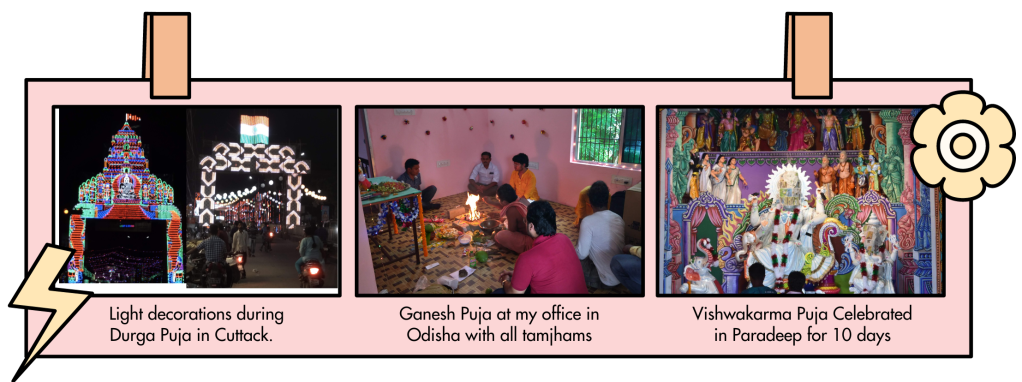
Even Dussehra in Odisha was a revelation, and yet I avoided returning to my hometown to witness its grandeur. The city was ablaze with lights, adorned with Durga idols, and pujas were happening everywhere. To an outsider, everything seemed enchanting, unfamiliar, and exciting. We partied for four glorious days during Durga Pujo, and I strangely found myself okay with not going back home.
Why Dussehra, you ask? Well, because I’m a Bengali, and to be more specific, a Provashi Bangali, a term reserved for Bengalis who don’t reside in West Bengal. My ancestors predominantly lived in Uttar Pradesh and Madhya Pradesh, while I was born and raised entirely in Jabalpur (M.P.). Yet, the passion for Dussehra unites us all, a festival that binds you to your own community.
After Odisha, the next chapter was Mumbai, driven by the prospect of career growth and the presence of my brother in the city. I had been fascinated with Mumbai since my childhood, and once I moved there, my visits to Jabalpur became increasingly scarce. A new job meant a lot to learn about the unique life of this enigmatic city.
Mumbai was a step ahead of Jabalpur in its cultural diversity, and somehow, it was this very diversity that helped me survive all these years. My friends hailed from different corners of the country, and the mingling of cultures kept me afloat.
I vividly recall the 2021 Durga Puja, marked by the shadow of COVID. We attended a modest Durga Pujo Pandal in Versova, Mumbai. The first day was all about the bhog (Prasad) served to us packed and an evening filled with a spectacular fire show. I was pleasantly surprised to find that Mumbai had something to offer me for Dussehra.
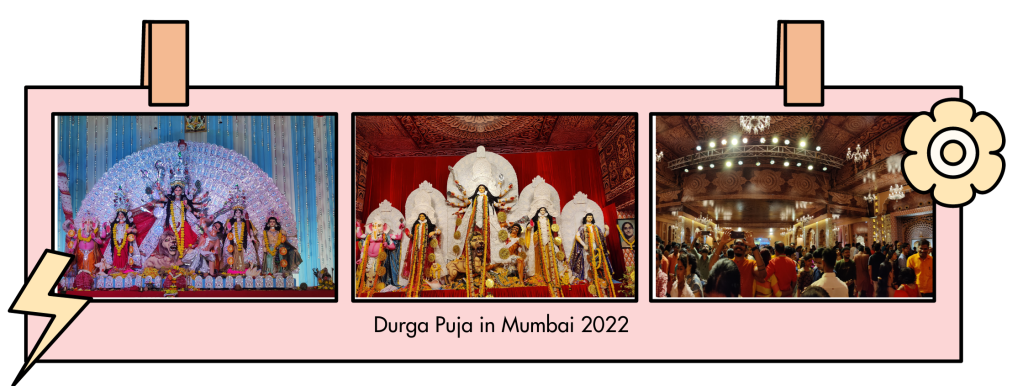
The 2022 Durga Pujo was even grander; we hopped from one Pandal to another, connected with a half-Bengali friend who shared our enthusiasm, and tried to celebrate it to the fullest. I may have missed a few Pushpanjali, but I believe Durga Ma forgave me. Even in a city hundreds of kilometers away from my hometown, I made a genuine effort to embrace the festival as a Bengali.
Then came 2023, a challenging year. I broke my foot, put on weight, and battled mild anxiety attacks. I escaped a toxic workplace but lost a lot of my self-confidence. This year, there was no room for experimentation. It was decided that Durga Puja would be celebrated at home. No more dodging Jabalpur.
As I reached Jabalpur, something unexpected happened. I felt something for this city I had never felt before. In hindsight I realize it was a homecoming, not just physical, but a deep-rooted emotional journey that left a mark on me.
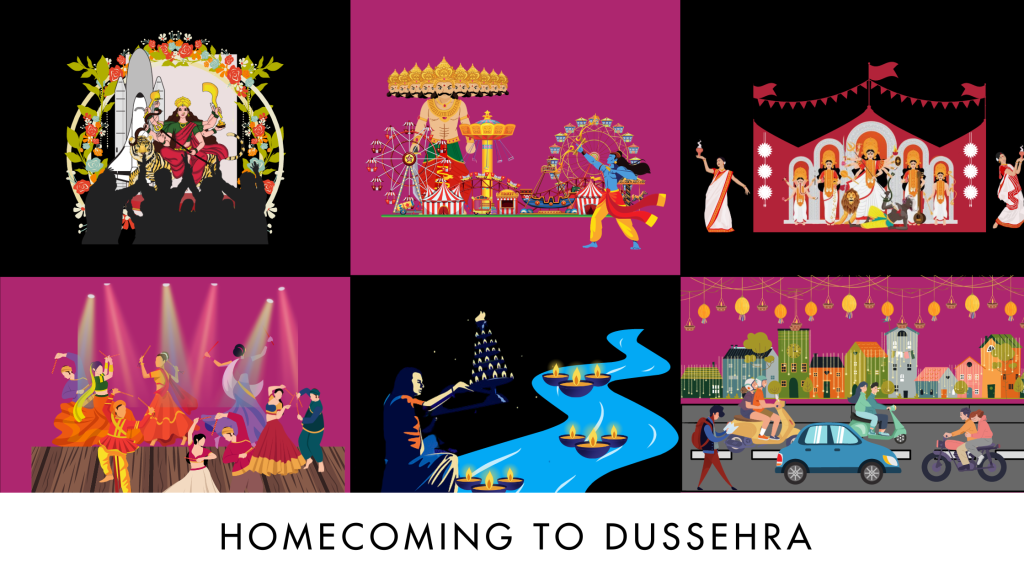
Dussehra in Jabalpur has always held a special allure. The cultural medley in the city ensures that there’s something for everyone during the nine days of Navaratri. Every corner of the city boasts theme-oriented Devi Pandals (one resembled Chandrayan this year) or a Bengali Pandal serving Khichudi in the afternoon, followed by cultural evenings of music and dance. Elsewhere, multiple Garba celebrations unfolded, with people spilling out of their homes to devour street food at makeshift chaupatis.
The buzz commenced on the first day of Navaratri but didn’t end there. On Day 10, Punjabi Dussehra celebrations kicked in, Ramleela had been running across the city for several days, and the Visarjan continued for five to six days after Dussehra. If you sought a more spiritual experience, you could visit Gwarighat for special aartis and temples for unique pujas.
Dussehra in Jabalpur is pure magic. Amidst all the chaos, you feel like you belong everywhere, and the city itself takes on a mystical aura. Regardless of your background, you’ll find your own celebration in this city, which isn’t even among India’s major metropolises. In this whirlwind of diversity, I discovered something I had never contemplated about Jabalpur. It’s a city that constantly evolves, welcoming new experiences, people, and cultures with open arms. You know what they call Jabalpur with affection – Sanskardhani. And you know what happened to me – I fell in love with the city all over again. This was an emotional homecoming, a realization that much had changed, but the city still had so much to offer, while I had nothing but love to give in return. I returned to Mumbai with a new determination, with the understanding that Jabalpur was not a thing of the past; it was an inseparable part of me, a part of my love story. And Dussehra was how Jabalpur reciprocated that love.
A Glimpse of Dussehra and Durga Puja in Jabalpur


 Rahagir
Leave a comment